Quick Answer
A strong problem slide makes clear who has the problem, what specifically is painful about it, and why existing solutions fall short. The job of the problem slide isn't to describe your product—it's to make the investor understand why something needs to change.
Why This Matters to Investors
While reading your problem slide, an investor is unconsciously trying to answer one question:
Is this actually a problem worth solving?
If they're not convinced, every slide that follows—solution, market, traction—loses its footing. If you convince them here, the rest of the deck only has to explain how you solve the problem you've already established.
3 Things a Strong Problem Slide Needs
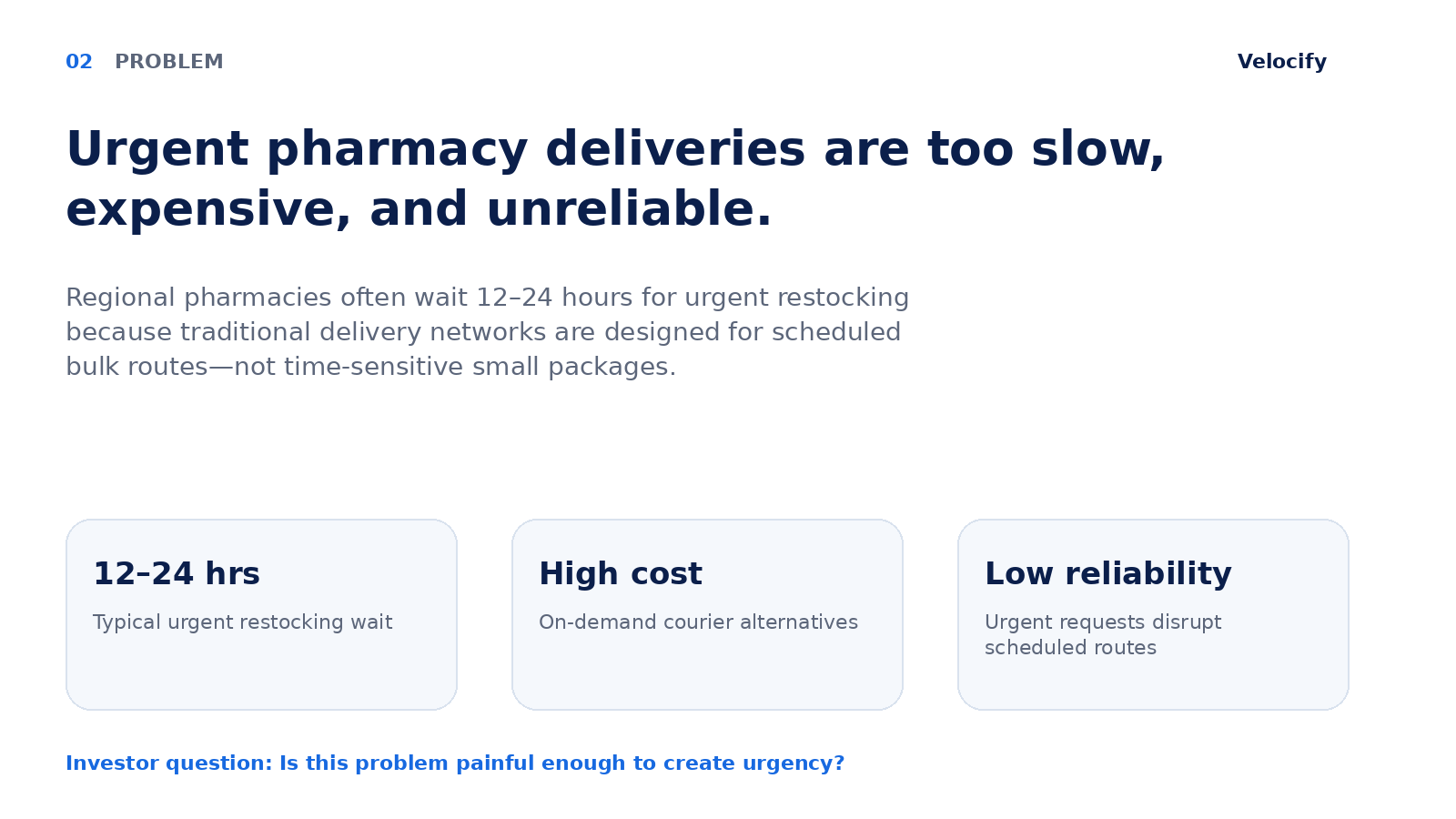
- A specific customer— not "small businesses," but something identifiable, like "independent dental groups with 5–20 locations."
- A specific pain— not "inefficient," but something measurable, like a "12–24 hour wait."
- Why existing options fall short— if customers are already solving this some other way, explain why that isn't enough.
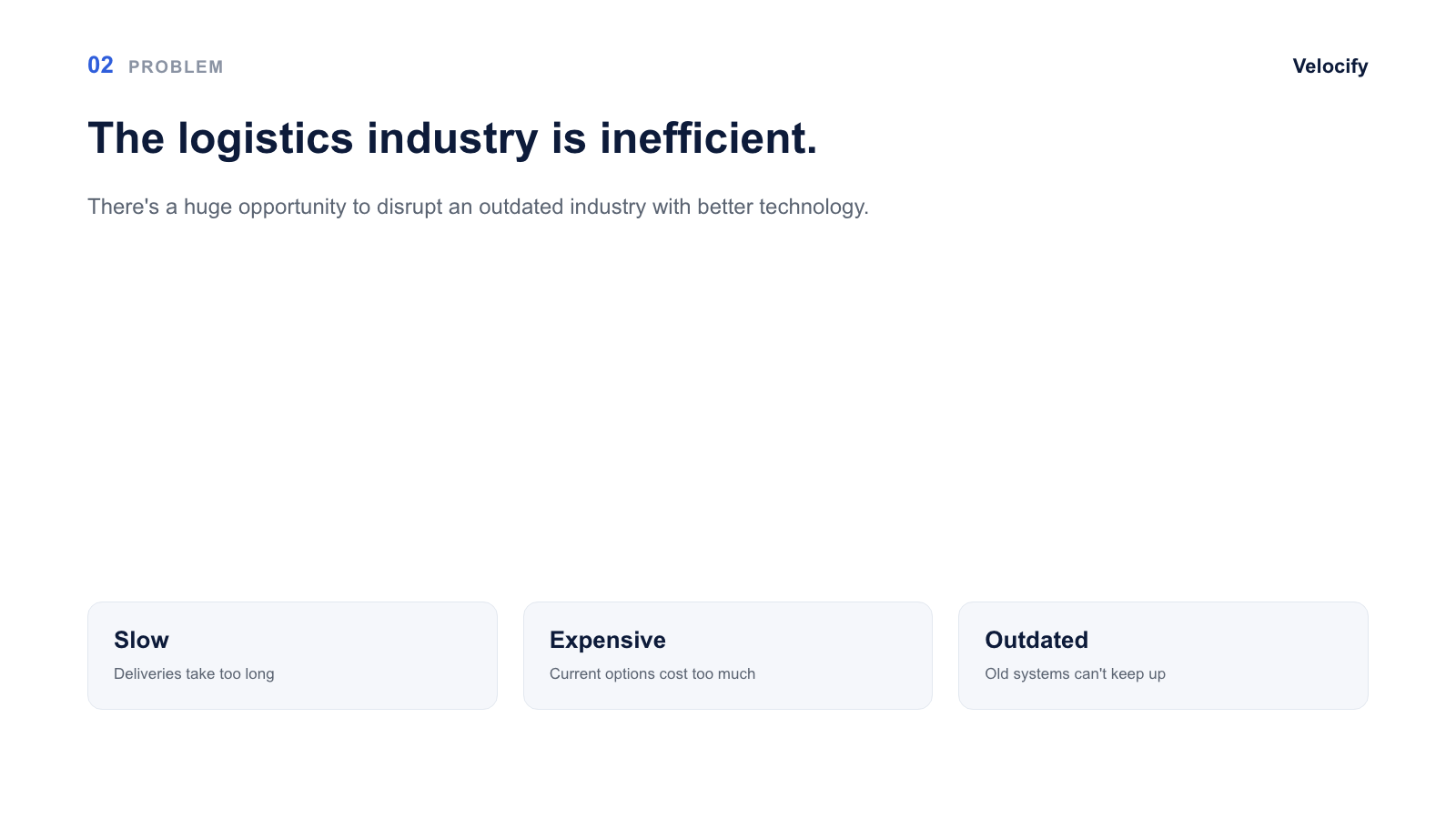
Here's what these three elements look like on an actual slide—a weak example, then a strong one.
Is the problem obvious to someone seeing your startup for the first time?
VC Radar evaluates whether your problem slide is genuinely clear to an investor, along with 20+ other criteria.
Analyze Your Pitch Deck with VC Radar →