Quick Answer
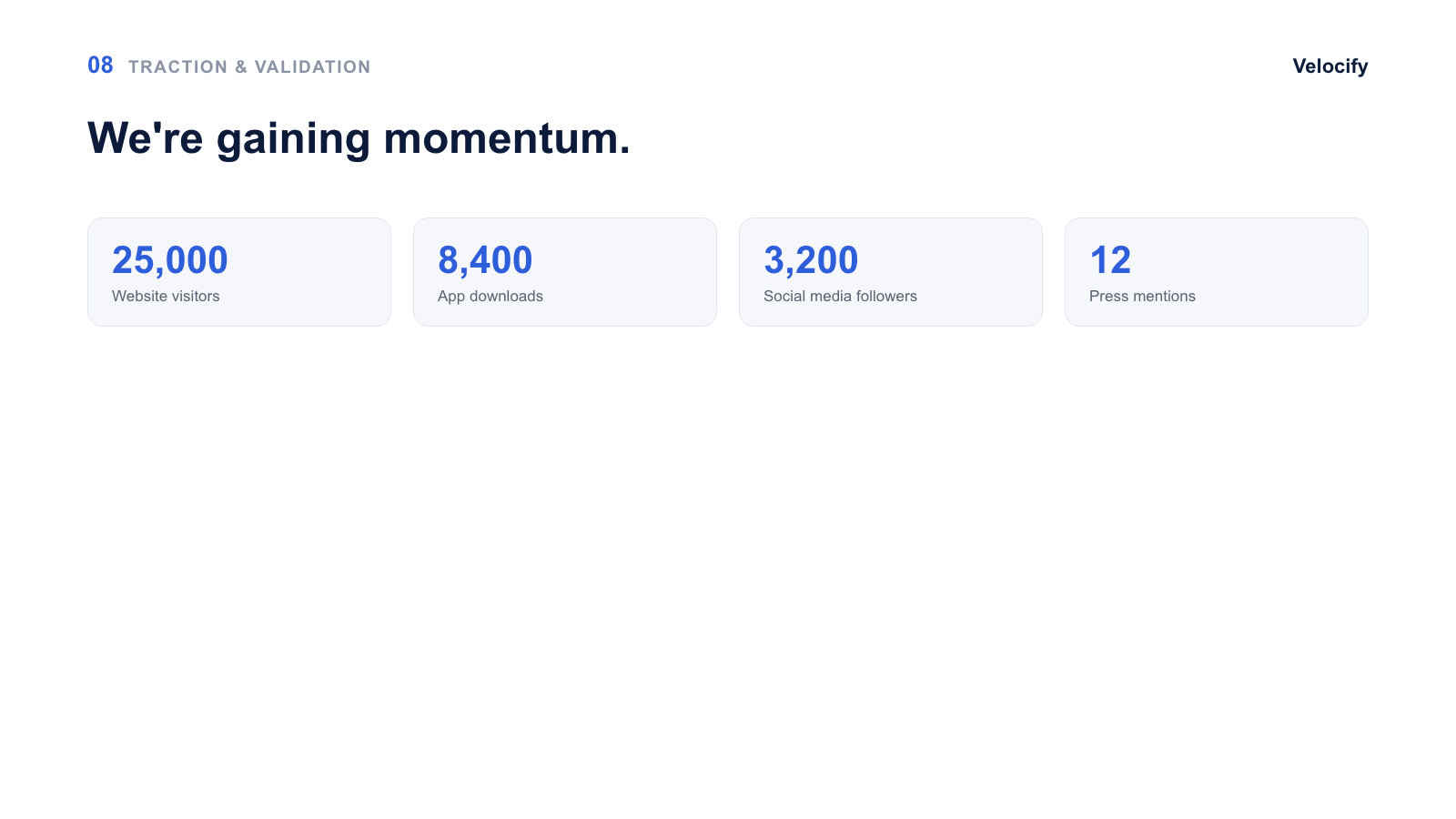
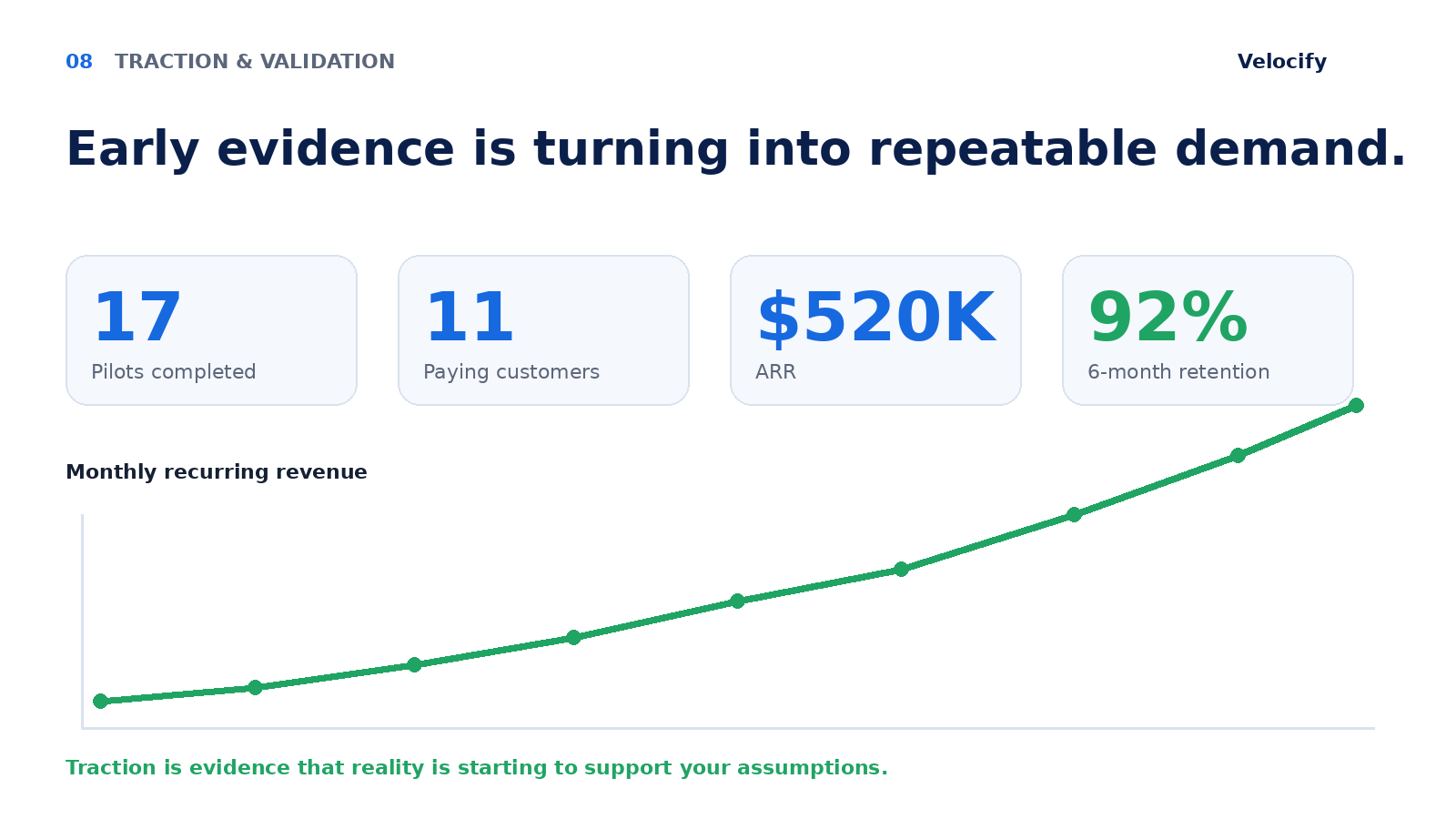
A strong traction slide shows evidence that reality is starting to support your assumptions—paying customers, revenue, retention—not activity metrics like website visitors or downloads. Even at a very early stage, you can show traction by showing what you've learned.
Why This Matters to Investors
While reading your traction slide, an investor is trying to answer one question:
Is reality starting to agree with your thesis?
No matter how compelling your claims about the product or market are, they're still just claims to an investor without evidence behind them. Traction is the first evidence that your thesis is being tested by reality— and holding up.
What a Strong Traction Slide Needs
Depending on your stage, evidence can include:
- Paying customers
- Revenue and growth
- Retention and repeat purchases
- Pilots, LOIs, design partners
- Product usage
- Customer interviews
- Technical milestones or regulatory approvals
A useful ladder for thinking about early-stage validation:
Idea → Customer Interviews → Prototype Usage → LOIs → Pilots → Paying Customers → Repeat Customers → Expansion → Growth
Not all of these signals carry the same weight. Someone agreeing your idea sounds interesting is weaker evidence than someone actually paying for it.
Here's what that difference looks like on an actual slide—a weak example, then a strong one.
Are you showing activity—or actual evidence?
VC Radar evaluates whether your traction slide shows real evidence of demand, along with 20+ other criteria.
Analyze Your Pitch Deck with VC Radar →